Safe Space
A confidential, non-judgemental conversation — online or in a quiet room — where you can speak freely. You set what we open, and what we leave for another day.
A calm place to begin
Compassionate, confidential counselling to help you find clarity and calm.
About
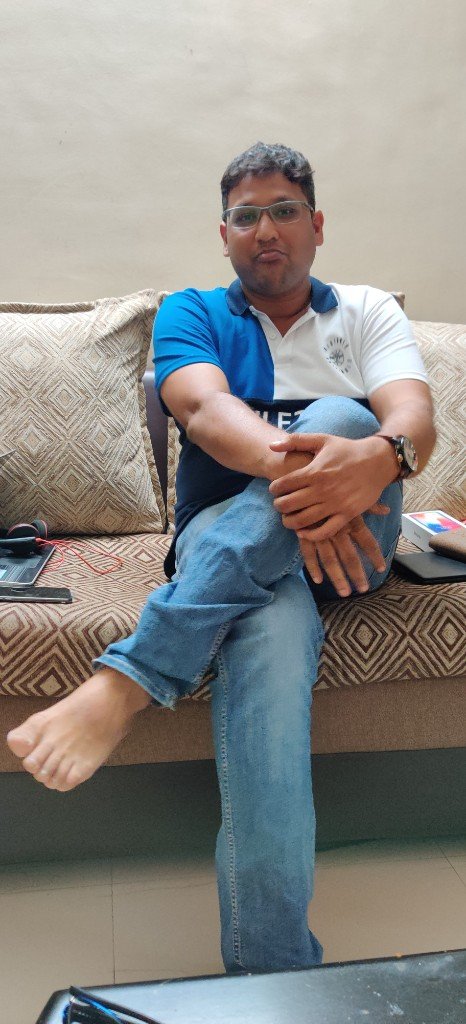
Counsellor at Tatparya
I offer a quiet, steady place for people who feel anxious, weighed down, grieving, or tired of coping on their own. You do not have to arrive with a polished story. Whatever you are carrying is a valid place to begin.
People come to me when sleep has frayed, a relationship feels strained, work has taken over, or a loss is still in the room. Sometimes there is no neat explanation — only a sense that something needs attention. We go at a pace that feels manageable, and you will not be asked to share more than you are ready to.
My work is warm and structured. Depending on what you need, we may stay with open conversation, use ideas from cognitive behavioural therapy, or practise ways of settling the body when worry spikes. You will always understand why we are trying something. The approach serves you, not the other way around.
Life continues between sessions. Part of the work is finding supports that fit your actual week: a shorter task, a clearer boundary, a kinder sentence to yourself. I walk with you while you build days that feel more like your own.
You do not have to arrive with the right words. We can begin with what is true today.
How I work
Counselling here is collaborative, paced, and grounded in methods that have been studied — always shaped around your life, not a script.
A confidential, non-judgemental conversation — online or in a quiet room — where you can speak freely. You set what we open, and what we leave for another day.
I draw on established therapeutic practice, including person-centred work and cognitive behavioural ideas, and I explain them in plain language before we use them.
You decide the direction. I offer reflections, questions, and practical tools. If something does not fit, we change it. Fit matters more than following a plan.
We look for changes you can carry on an ordinary Tuesday, not only inside the session. Progress is allowed to be quiet, uneven, and still real.
Resources
Short practices you can try between sessions. They are general ideas, not a substitute for counselling, medical care, or urgent help.
Name five things you can see, four you can feel, and three you can hear. Let the exhale last a little longer than the inhale.
This is a way of coming back to the room, not a test you can fail. If it feels activating, stop. Place both feet on the floor, or hold a cool glass and notice its temperature. If worry is constant, frightening, or getting in the way of daily life, you deserve more than a tip. Counselling can help you understand what the worry is protecting.
Choose one act that takes less than ten minutes. Completing it counts, even if the rest of the list waits until tomorrow.
Motivation often follows a small action, rather than arriving first. Shrink the task until it feels almost too easy: open the document, put on your shoes, send the two-line message. Rest is part of the plan. It is not a reward you have to earn by finishing everything else.
When you notice self-criticism, pause and ask what you would say to a close friend standing in this exact moment.
Self-compassion is a practice, not a personality you either have or lack. You might place a hand on your chest and say, “This is hard, and I am allowed to go gently.” You do not have to believe the kinder sentence completely for it to help. Repeating it is enough to interrupt the harsher one.
A pause does not need to be justified by how productive the day was. Ten quiet minutes can be the useful thing.
If rest brings guilt, notice the thought without arguing with it. Some people find it helps to put rest in the diary the way they would a meeting, then protect that time. Sustainable change is built in the spaces between effort. Pushing through every signal of tiredness rarely makes the work kinder.
What to expect
The first step is only a note. There is no interview to pass, and you can decide after we meet whether you want to continue.
Send your name, a way to contact you, and the days that tend to work. A sentence or two is enough. You do not need to explain everything in the form.
We talk about what brings you here, what you hope might be different, and how we could work together. You can ask anything. You can also decide not to continue.
If it feels right, we meet weekly or fortnightly and review as we go. You remain in charge of the pace. Confidentiality, and its few legal limits, are explained before we begin.
Book a session
Share a few practical details and a little about what brings you here. I reply within two working days. This note does not commit you to a session.
Your note is confirmed on this page only. It has not been emailed. Please write to coniandhar@gmail.com or call +91 9900847000, and I will reply within two working days.
If you are in crisis, contact local emergency services or a crisis line. This form is not monitored for emergencies.
Your name and email are used only to reply about a session. This form does not send or store what you type — please email coniandhar@gmail.com or call +91 9900847000. Do not use this form if you need urgent help. This website does not provide emergency support.
This is a placeholder privacy note. Before you publish, replace it with a policy that describes what you truly collect and where it goes.
In this preview, the request form runs in your browser and does not send or store what you type. When you connect the form to email or a secure service, say so here in plain language: what you collect (name, email, availability, and any note a person chooses to share), why (to arrange a session), how long you keep it, and who can see it.
Ask people not to send detailed health information through an ordinary email form. Do not use website analytics that you have not mentioned here.
This draft is a plain-language starting point, not finished legal terms.
The pages on this site are general information. They are not a diagnosis, a treatment plan, or a crisis service. Reading them, or submitting the form, does not create a counselling relationship. That relationship begins only when we have both agreed to work together.
Sessions are confidential within the legal and ethical limits of the profession. Those limits, including situations where there is a risk of serious harm, are explained before we start. Fees, cancellation notice, and session length are confirmed in writing before the first appointment.